

Imagine waking up in a nation where laws change overnight, leaders hold unchecked power, and your personal freedoms are never truly secure. In a world of shifting tides and divisive debates—from the Idaho House to the Supreme Court—the question arises: Why do we need the constitution? This foundational document stands not just as a relic of history, but as an active safeguard of liberty, justice, and balance in American daily life. Let’s explore its enduring impact and why the constitution remains essential today.
Setting the Stage: Why Do We Need the Constitution in Modern Society?
In modern America, we often take for granted the frameworks that shape our nation’s laws and freedoms. But step back for a moment and consider: With ongoing developments in state law, high-profile Supreme Court cases, and heated discussions in the house of representatives, a strong constitutional foundation remains more vital than ever. Why do we need the constitution? Its very existence provides stability, prevents sudden shifts in government, and protects our most cherished constitutional rights—even in times of crisis, advocacy group actions, or public unrest. Without this backbone, society risks descending into uncertainty and injustice. Navigating disputes, creating new constitutional amendments or handling issues like health care policy would be nearly impossible without clear constitutional guidelines. The constitution ensures that, regardless of political shifts, basic freedoms and checks on power remain protected for all.
The conversation isn’t just academic. Every debate about state legislatures passing new laws or proposals for a constitutional convention brings the constitution’s relevance to the forefront. Whether tackling balanced budget amendment campaigns, addressing federal budget concerns, or questioning the boundaries of government overreach, we consistently return to the constitution for guidance. It is the ultimate reference point—rooting our legal system in principles that endure even as the world changes around us.
For a deeper look at how constitutional amendments are proposed and the pivotal role of conventions in shaping our nation’s legal framework, you may find it helpful to explore the detailed overview on the process and impact of constitutional conventions. This resource breaks down the steps and significance behind these historic gatherings.

An Observational Look at Stability and Freedom
At its core, the constitution provides two critical assurances: stability and freedom. Stability comes from clear rules and a structured government, preventing abrupt changes that could disrupt society. Freedom, meanwhile, is anchored in the constitutional rights it protects—like the right to free speech or a fair trial. These aren’t just historical ideals. Every time the Supreme Court renders a decision or a state law is challenged, the constitution becomes a living document, shaping our daily experiences. People’s ability to form advocacy groups, campaign for term limits, or lobby for constitutional reform are all manifestations of a society governed by law rather than power.
By continually serving as a check against abuse and a platform for advocacy, the constitution ensures that Americans maintain both a sense of security and the power to challenge injustice. This dual purpose is foundational: the constitution not only deters government overreach but also inspires confidence in our ability to demand fairness and pursue reform.
What You'll Learn in This Exploration of Why Do We Need the Constitution
-
The historical context behind the constitutional convention
-
The protection of constitutional rights and individual freedoms
-
The interplay between state law and the supreme court
-
Real-world implications for American society and the united states as a whole
A Brief History: The Constitutional Convention and Why Do We Need the Constitution
To understand why we need the constitution, it’s important to revisit the turbulent years before its creation. The United States existed in a kind of legal wilderness, governed loosely by the Articles of Confederation. Without a strong central authority, the nation faced economic strife, weak enforcement of laws, and ongoing disputes between states—think squabbles over state law, federal government authority, or maintaining a balanced budget. It was clear that reform was necessary—a structure that could unite, not divide.
The constitutional convention called in 1787 became the forum for fierce debates. Delegates, including future presidents and members of the house of representatives, clashed over issues such as state representation, centralized power, and the nature of rights. This was advocacy in its earliest form, laying the groundwork for subsequent constitutional reform and the spirit that animates today’s proposed amendments. Their work gave birth to a system resilient enough to stand up to new challenges and inspire continuous improvement through the article v convention process.
Defining Moments: Roots of the United States Constitution
The roots of the U. S. Constitution run deep. In a candlelit room in Philadelphia, delegates forged compromises that would guide a nation. From fierce arguments on whether to balance the federal budget to pressures for a bill of rights, these founders understood that reckless change or consolidation of power—what is now called a “runaway convention”—had to be checked by clear rules and deliberate amendment processes. This careful design is why the constitution has weathered centuries of political storms. Its historical framework underpins the ongoing debates in the Idaho House of Representatives and nationwide campaigns for constitutional change.
The ability to call a convention for the purpose of proposing constitutional amendments was hard-won, meant to allow evolution without risking chaos. Throughout American history—from the abolition of slavery to major Supreme Court cases on health care—the constitution’s roots have continually provided both continuity and a mechanism for change.
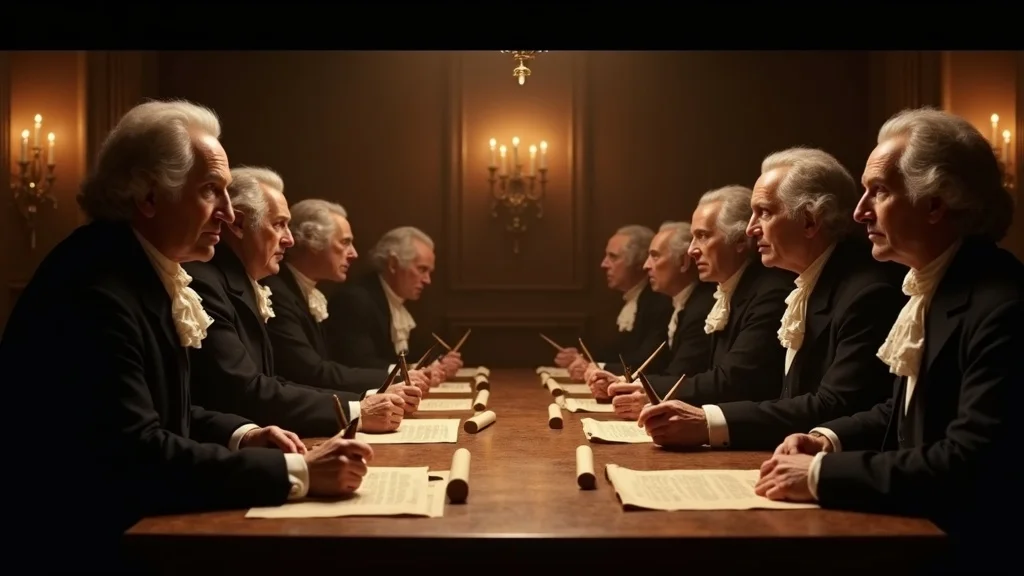
How the Constitutional Convention Shaped National Principles
The constitutional convention didn’t merely produce a single document—it shaped the American ethos. Principles like separation of powers, checks and balances, and an independent judiciary were hotly debated then and remain central today. These foundational elements are what empower citizens to campaign for term limits, press for a federal budget overhaul, or demand new rights. The careful design ensures that any constitutional change—from major reforms to subtle shifts in interpretation—comes through rigorous process and collective agreement.
Moreover, the convention recognized the need to blend flexibility with restraint. Delegates argued extensively about how amendments would be proposed—leading to the Article V convention mechanism still used today. The resulting principles set an enduring template for the balance of innovation and stability, enabling subsequent generations to address everything from the death penalty to modern proposals for budget amendments without sacrificing the integrity of the system.
“The constitution was created not to enable government, but to secure liberty.”
Why Do We Need the Constitution to Safeguard Constitutional Rights?
Constitutional rights form the heart of American democracy. From the freedom to speak your mind and worship as you please, to protection from arbitrary government action, these rights are not self-enforcing. They require an institutional safeguard—a supreme law that stands above ordinary legislation. That’s why we need the constitution: to enshrine individual liberties and empower the courts, especially the Supreme Court, to serve as guardians of these rights even against powerful interests or turbulent public opinion.
When cases reach the Supreme Court, questions about state law, government limits, and the boundaries of individual freedoms are judged using constitutional standards. This consistent application protects against abuses, ensuring that shifts in political winds don’t threaten the principle of justice for all. From challenges to health care law to issues like the death penalty, the constitution is the ultimate check, making sure that government by the people does not trample the very people it is meant to serve.

Individual Liberties: The Backbone of Democracy
What makes a democracy thrive? The answer is often found in the bundle of freedoms each citizen can claim: free speech, due process, the right to assemble, protection from unreasonable searches. These individual liberties are not given at the government’s discretion—they are set out in the constitution and defended by institutions like the Supreme Court. This system ensures that even a powerful state legislature or a popular movement can’t erode fundamental rights on a whim.
Think of the major legal battles for equal protection, abortion rights, or the death penalty. In every case, it’s the constitution that determines the limits of government authority and the line where freedom prevails. In this sense, asking why do we need the constitution is to ask why we value lives lived without fear—why we trust that government cannot unilaterally rewrite the rules of our existence.
The Role of the Supreme Court in Upholding Constitutional Rights
The Supreme Court is often the final word in American legal debates. Its justices interpret the constitution, clarifying rights and settling disputes that ripple through state and federal law. When advocacy groups or citizens challenge a law—whether about healthcare, education, or personal freedoms—they often turn to the Supreme Court, relying on it to strike down rules that violate constitutional standards. This dynamic underscores the constitution’s pivotal role as a living document: one that adapts to new circumstances, even as it upholds timeless values.
The court’s power is not boundless; rather, it’s defined by the constitution itself and the process of constitutional amendments. From the interpretation of the first amendment to recent decisions on key rights, the Supreme Court acts as both shield and measure—ensuring that government actions reflect the rule of law, not the rule of men. Its position as a check on both Congress and state legislatures is a direct result of the constitutional vision set at the convention centuries ago.
Why Do We Need the Constitution to Balance Powers in the United States?
Without a clear framework, power in any nation can become dangerously concentrated, leading to abuses and instability. This is why the U. S. constitution deliberately divides authority among three branches—executive, legislative, and judicial—and between federal and state governments. The aim is to avoid tyranny, ensure healthy debate, and require cooperation on matters from budgeting to rights protection. This separation explains how the Idaho House or any state law must fit within the federal structure, and why judges can check the actions of a presidential candidate or Congress.
The checks and balances at the heart of the constitution prevent any single branch or leader from accumulating too much control. Each branch can challenge or limit the others—Congress can pressure the Supreme Court, the president can veto legislation, courts can overturn laws as unconstitutional. This design is more than theory; it’s the reason crises don’t spiral into dictatorship and why policies like the balanced budget or federal budget reforms undergo careful review instead of being rushed through “runaway conventions. ”
Checks and Balances: Limiting Abuse of Power
“Checks and balances” may sound abstract, but its impact is tangible. When the federal government proposes a new law—whether about health care, crime, or the death penalty—checks ensure it can be challenged and refined. The courts review constitutionality, Congress holds hearings, and advocacy groups can challenge unjust statutes. In states like Idaho, the system works the same way: laws are drafted, debated, and tested for constitutional compliance.
The brilliance of this framework is that it allows for deliberate, thoughtful decision-making rather than impulsive action. When debate arises about the scope of a proposed amendment or the interpretation of state versus federal law, the constitution serves as the umpire, keeping power in check and ensuring that the balance between public good and individual liberty stays intact.

Federal vs. State Law: Navigating Complexities
Federalism—the division of power between national and state governments—is a central feature of the American constitution. When federal law and state law clash, the constitution guides how disputes are resolved. It establishes the “supremacy clause,” meaning federal rules generally trump state ones, but also carves out areas where states can innovate. This system keeps authority from being centralized and allows states to serve as “laboratories of democracy” on issues like crime, health care, or education.
Supreme Court cases frequently address these boundaries—deciding, for example, whether a state’s death penalty law violates constitutional rights or if state budgets can be set independently from federal guidelines. The balance is delicate: too much power in Washington, D. C. risks stifling diversity and responsiveness; too much in the states can lead to inequality. The constitution’s careful structure is what makes possible both unity and creativity across the United States.
|
|
|
Key Differences in State Law Interpretation vs. Federal Constitutional Rights |
|
Area |
State Law Interpretation |
Federal Constitutional Rights |
|---|---|---|
|
Freedom of Speech |
May have stricter or broader rules, but not less than federal standards |
Protected by First Amendment; overrides state restrictions |
|
Criminal Justice |
Procedures can vary; must observe basic due process |
Rights to counsel, fair trial guaranteed under U.S. Constitution |
|
Voting Laws |
Varies on registration, ID, early voting |
Equal protection and anti-discrimination required |
|
Health Care Regulation |
States set own policies but must not conflict with federal law |
Federal laws (e.g., Affordable Care Act) set national standards |
|
Death Penalty |
Permitted or banned based on state preference |
Must not violate Eighth Amendment protections |
Personal Perspective: How Why Do We Need the Constitution Impacts Daily Life
It’s easy to think of the constitution as something distant, debated in halls of power or dissected by legal experts. But the constitution shapes our lives in direct and concrete ways, every single day. From your right to voice opinions without fear of censorship, to expectations of privacy in your home, or the ability to vote in contested elections, every freedom is tied back to constitutional principles. Whether policy debates erupt in the Idaho House or new federal regulations on health care take effect, the rules governing your experience are rooted in constitutional law.
These real-world implications make the constitution a living document—felt not just in courtrooms or state legislatures, but around kitchen tables, at school board meetings, and in workplaces nationwide. The safeguards against government overreach, the promise of a fair trial, and the checks on lawmakers’ power—each is an example of the constitution’s ongoing relevance long after the constitutional convention.
-
Freedom of speech and expression
-
Right to fair trial
-
Protection from government overreach
-
Influence on policy debates in places such as the idaho house

Common Misconceptions About Why Do We Need the Constitution
Some argue that the constitution is outdated, an 18th-century document unsuited to today’s complex world. Others see it as so rigid that real reform is impossible. However, this view ignores the document’s powerful amendment process and its openness to interpretation—a feature, not a bug. The ability to propose constitutional amendments, call a convention for the purpose of proposing change, and pressure Congress for needed reforms all indicate that our constitutional system is both robust and responsive. Even contentious issues—whether health care policy, the death penalty, or term limits—can find new expression through the flexible mechanisms set up by the founders.
Critics sometimes warn of a “runaway convention,” where amendments could upend basic rights. But the reality is that amendments require the approval of both Congress and most state legislatures—making radical change more challenging than is often assumed, but ensuring that reforms are thoughtful and widely supported. That’s the safeguard envisioned by those who gave us the constitution: an enduring guide, capable of both stability and reform.
Is the Constitution Outdated or Ever-Evolving?
Far from frozen in time, the U. S. constitution has seen 27 amendments, reflecting the nation’s evolving values and challenges. When advocacy groups, members of the House, or state legislatures push for constitutional change—like budget amendments or civil rights protections—they are tapping into a living tradition. Amendments and Supreme Court interpretations have kept the constitution responsive to everything from voting rights to technological change, balancing the need for reform with the preservation of core principles.
From its initial promise to today’s debates about digital privacy, health care access, or campaign finance, the constitution’s resilience and ability to adapt remain unmatched. The amendment process, while deliberately challenging, is designed to allow the United States to move with the times—ensuring enduring freedom and justice rather than stagnation.
"The enduring relevance of the constitution lies in its ability to adapt through amendments and interpretation."
People Also Ask: Expanding the Conversation on Why Do We Need the Constitution
What is the new constitutional amendment 2026?
The answer addresses the latest developments and future implications of new amendments within the context of why we need the constitution.
While the full outcome of a 2026 amendment is not finalized, proposals typically concern matters of nationwide significance—like voting reforms, budget limitations, or digital privacy. Such amendments reflect the constitution’s built-in flexibility, showing how the document is equipped to handle new priorities while defending foundational liberties. Regardless of topic, each amendment goes through a rigorous process: proposal by Congress or an article v convention, then ratification by the states. This ensures any change strengthens, rather than weakens, the integrity of our system.
Who can declare a president incompetent?
This section explores the legal framework and constitutional routes—such as the supreme court and congressional proceedings—that address presidential incapacity.
The constitution provides specific mechanisms for addressing presidential incapacity, most notably through the 25th Amendment. If the vice president and a majority of the cabinet declare the president unable to perform duties, Congress is notified. If disputed, Congress decides the outcome—not the Supreme Court—by a two-thirds vote. While the Supreme Court or Congress may investigate related legal questions, the process is primarily political, designed to ensure swift yet accountable transfers of power and maintain government stability.
Can soldiers live in your house during war?
A concise explanation of constitutional protections against the quartering of soldiers, highlighting the role of constitutional rights.
The Third Amendment to the U. S. Constitution notably protects citizens against the forced quartering of soldiers in private homes—even during war—without the owner’s consent. This rare but important right emerged from the founders’ experience with British rule and stands as a witness to the constitution’s role in defending personal property and autonomy from government intrusion.
What does "I plead the 8th" mean?
Clarifying the meaning and significance of the Eighth Amendment in the united states constitution.
To “plead the 8th” is to invoke the Eighth Amendment, which protects against cruel and unusual punishment as well as excessive fines or bail. In practical terms, it means government cannot impose penalties that are disproportionate, barbaric, or unjust. This protection influences debates over the death penalty and sentencing rules, reinforcing the constitution’s shield around individuals facing the power of the state.
FAQs on Why Do We Need the Constitution
-
How does the constitution affect everyday citizens?
The constitution shapes daily life—protecting freedoms, ensuring fair laws, and guiding everything from speech to searches, education, health care regulation, and criminal justice. -
Why is the constitution considered the "supreme law of the land"?
The supremacy clause makes the U.S. constitution take precedence over all federal and state laws, ensuring it is the final authority in all legal matters within the country. -
What role do state law and the supreme court play in interpreting the constitution?
State laws may innovate, but must respect constitutional rights. The Supreme Court interprets those rights, deciding which laws meet the nation’s legal standards and which fall short. -
How has the constitution evolved since the constitutional convention?
Through 27 amendments, landmark Supreme Court cases, and ongoing debate, the constitution has adapted to meet new needs—while steadfastly protecting fundamental rights from government overreach.
Key Takeaways: Why Do We Need the Constitution in the United States
-
The constitution establishes foundational protections for individual rights.
-
It balances powers between federal and state law to maintain order and justice.
-
Courts like the supreme court ensure evolving interpretation, enabling adaptation to societal change.

Reflecting Forward: The Ongoing Relevance of Why Do We Need the Constitution
The U. S. constitution is more than parchment and ink; it is the country’s living promise to its people—offering justice, order, and freedom, no matter the challenges ahead.
If you’re inspired to further understand the broader landscape of American civic engagement and how foundational documents like the Constitution continue to influence movements and reforms, consider exploring the full range of resources and articles available on Rise And Revolt’s knowledge hub. There, you’ll discover in-depth discussions on constitutional change, citizen activism, and the evolving role of law in shaping our society. Delving into these topics can empower you with advanced insights and practical strategies for participating in democracy—whether you’re advocating for reform or simply seeking to stay informed. The journey to understanding and upholding constitutional values is ongoing, and every new perspective adds to the strength of our collective future.
Explore More and Take Action
Shop our collections now!
Interested in commemorating the enduring values of American democracy? Shop our collections now for unique pieces that celebrate the constitution’s history and its ongoing role in shaping our nation.
Sources
-
https://supreme.justia.com/constitution/ – Justia: U.S. Constitution Supreme Court interpretations
-
https://www.law.cornell.edu/constitution – Cornell Law: U.S. Constitution Annotated
The U.S. Constitution serves as the foundational legal document that establishes the framework for governance, delineates the powers of government branches, and safeguards individual rights. It ensures a balance of power through a system of checks and balances, preventing any single branch from becoming too powerful. Additionally, the Constitution protects fundamental liberties, such as freedom of speech and religion, by limiting governmental authority. Its adaptability through amendments allows it to evolve with societal changes while maintaining core principles. For a comprehensive understanding of the Constitution’s significance, you may find the article “Why Exactly Do We Need a Constitution?” insightful. (legalclarity.org)
0 comments